

How To Keep A Burn Wound Clean
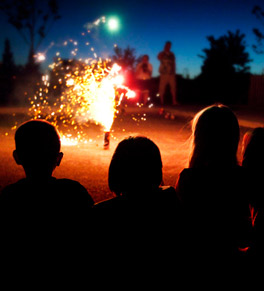
Watching fireworks from a rubber distance is best, say UCI Health experts.
Have you heard that smearing butter on a burn, pressing a cut potato against it or icing it can help promote healing and ease the pain?
None of these methods are recommended, says Dr. Nicole P. Bernal, a surgeon and burn specialist with the UCI Regional Burn down Heart. In fact, these age-old dwelling house remedies not simply don't work, they likewise can do more damage to burned skin.
What is the right way to treat a burn down? The beginning thing to consider is how astringent it is, says Bernal. Burns are generally classified past the depth of damage to the skin:
First-degree burns
- These burns touch only the pare's surface, or epidermis, and usually result in redness and mild pain.
- Overexposure to the sun can cause a first-degree burn.
Virtually first-degree burns don't require medical attention, says Bernal. She recommends rinsing the burn surface area with cool h2o for five to x minutes or until the pain subsides. Next, employ a moisturizing lotion and if needed, have an over-the-counter pain reliever for a few days. If the hurting doesn't subside, see a medico.
Second-degree burns
- These burns penetrate to the 2d layer of skin, or dermis.
- They are ordinarily bright crimson with a moist or blistered appearance.
- Scalding with extremely hot water or other liquid may cause this type of burn.
- Some 2d-degree burns may crave a peel graft or skin substitute to heal.
Blistering and sluffing of peel is common with second-degree burns and can go infected, which is why Bernal advises consulting a doc.
Third-caste burns
- These burns involve all layers of the peel and are normally dry or leathery to the touch.
- They can appear ashen or charred black or dark-brown.
- If the burn down has damaged nerve endings, the patient may have no awareness of pain.
- Causes can be hot oil, friction, touching hot surfaces such as a stove, curling atomic number 26 or a motorcycle muffler or even a chemic fire.
These more than serious burns can atomic number 82 to devastating injury, including loss of part or limbs, disfigurement and recurring infection. Astringent burns can damage muscles and other tissue that bear upon every system of the body, and they can issue in expiry.
Third-degree burns need firsthand medical attention and often require a pare graft or pare substitute to heal, Bernal says.
Center versed in all aspects of burn intendance
The UCI Regional Burn down Middle at UCI Medical Heart uses a multidisciplinary team of burn-specialist surgeons, nurses, wound intendance specialists, physical therapists, social workers, example managers and psychologists to manage all aspects of burn care.
It's the only burn center in Orange Canton verified by the American Higher of Surgeons and the American Burn down Association. It includes an inpatient unit of measurement and an outpatient clinic.
Treating burns at habitation
Many minor burns can be treated at dwelling. Bernal offers these do's and don'ts:
Do:
- Run cool water (not cold or icy) for v to ten minutes over a fire smaller than your hand.
- Seek medical attention for any burn down larger than your paw — fingers to wrist — or if the burn affects the feet, face, optics or genitalia.
- Meet a dr. if you take diabetes and you burn your foot.
- Get immediate care if your cell telephone or eastward-cigarette explodes in your pocket, if you autumn into a fire pit or any time your clothes catch burn.
- Remove clothing and jewelry nearly a burn, merely don't try to peel off wear stuck to the burn down.
Don't:
- Touch or soak a serious fire. Embrace information technology with something dry and become to a hospital or burn clinic.
- Pop blisters. But if they do flare-up, gently skin away the expressionless peel then germs don't have a dwelling house to live in.
Treatment for small burns
For first-degree or second-degree burns smaller than about two inches in bore, Bernal recommends the following home-treatment steps:
- Wash the area daily with balmy soap.
- Apply an antibiotic ointment or dressing to proceed the wound moist.
- Cover with gauze or a Band-aid to go along the area sealed.
- Apply antibiotic ointment ofttimes to burns in areas that cannot be kept moist.
Related stories
- What'southward in your home first-aid kit? ›
- How to properly treat a wound ›
- Beyond sunscreen: How to protect yourself from the sun ›
Post a Comment

Source: https://www.ucihealth.org/blog/2018/05/treating-burns
Posted by: jaimeoligh1990.blogspot.com
0 Response to "How To Keep A Burn Wound Clean"
Post a Comment